

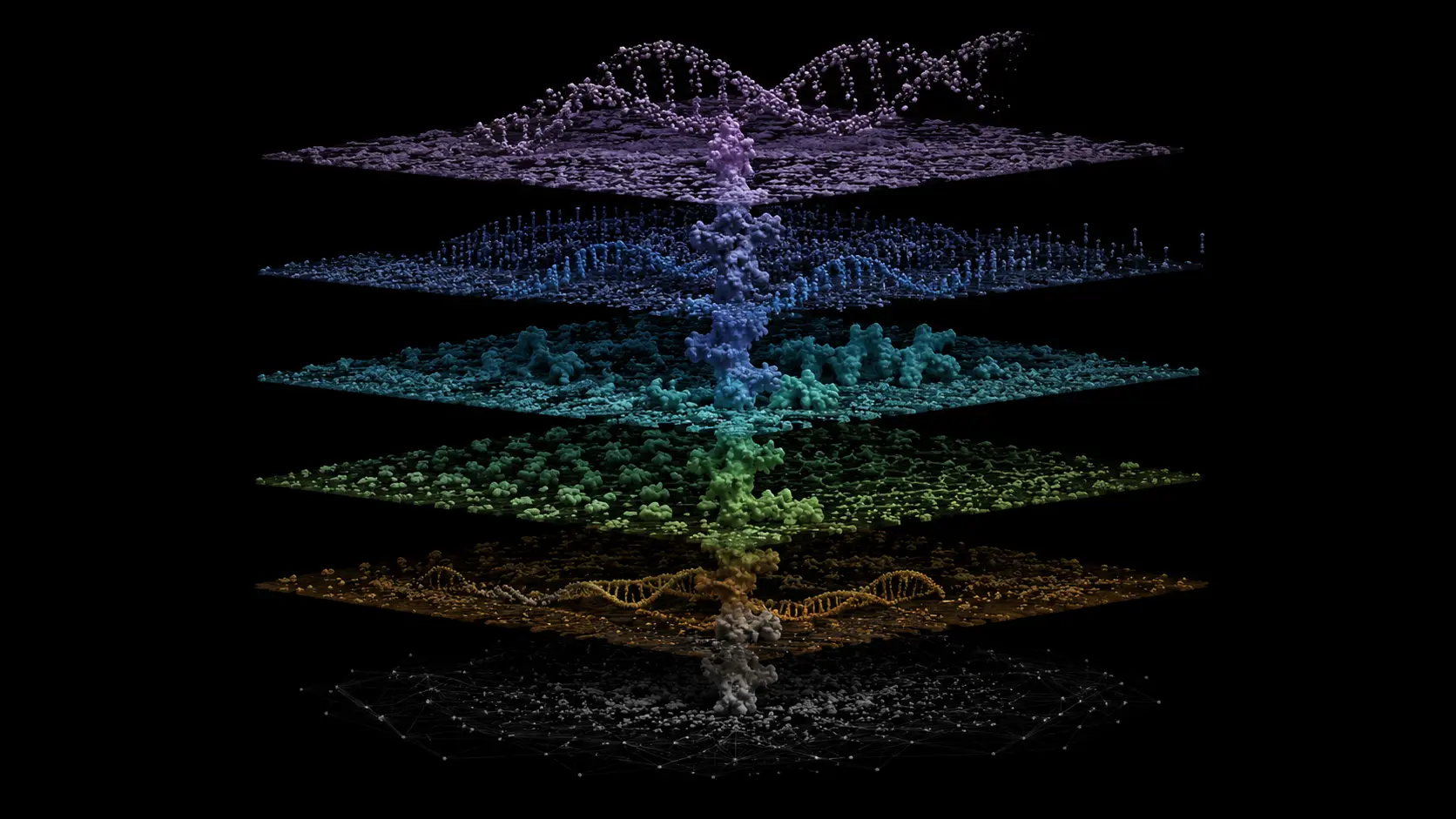
Multiomics stands out as an approach that examines biological systems simultaneously at different layers. The massive datasets obtained from omics layers such as genomics, transcriptomics, proteomics, and metabolomics offer a limited perspective on their own. However, when these layers are combined, a holistic picture of cellular processes emerges.
For example, a change in the expression level of a gene may not directly reflect the amount of protein or metabolic products. Therefore, multiomics strategies have become indispensable for understanding biological complexity.
For developers and technical teams, multiomics presents a multifaceted challenge that involves not only data analysis but also disciplines such as data management, statistical modeling, and machine learning. Each omics layer has its own unique data formats, noise levels, and sources of biological variation.
This diversity creates significant technical hurdles during the integration process. For example, it is not possible to directly compare count data obtained from an RNA sequencing experiment with mass spectrometry output. Therefore, data preprocessing steps must be optimized separately for each layer.
In this article, we will address the fundamental concepts and challenges faced by beginners in multiomics projects. We will focus particularly on the methodological aspects of data integration, statistical approaches, and biological interpretation. Our aim is to help the reader acquire a solid conceptual framework in this field and be prepared for the problems they may encounter in practice.
1. Data Types and Preprocessing Challenges
The first step in multiomics data integration involves understanding and appropriately preprocessing data from different omics layers. Each data type has its own unique structure. Genomic data includes variant calls and copy number alterations. Transcriptomic data is typically represented as gene expression matrices. Proteomic and metabolomic data can be in the form of intensity measurements or mass spectra. This diversity complicates the standardization of data formats and requires careful transformation before integration.
Preprocessing steps differ for each omics layer. For example, normalization methods (e.g., TPM or FPKM) are critical for RNA sequencing data. In proteomic data, log transformation and centering are frequently applied. For metabolomic data, steps such as peak alignment and compound identification are added. These differences require a good preprocessing strategy to preserve biological signals and remove technical variation during integration.
Additionally, data quality and missing data issues are common in multiomics projects. Measurement gaps can occur across different omics layers. For instance, a gene's transcript may be detected while its protein is not. Such missingness can affect the performance of integration algorithms. Therefore, missing data management and imputation methods hold an important place in multiomics analyses.
The biggest challenge in multiomics data integration is that technical variation across different omics layers masks the biological signal.
2. Integration Methods and Strategies
Various statistical and computational methods have been developed for multiomics data integration. These methods are based on approaches that combine data matrices or project them into a common representation space. First, concatenation-based methods combine data from all omics layers into a single matrix. This approach is simple and understandable but can lead to issues due to high dimensionality and scale differences.
Second, multi-block data analysis methods treat each omics layer as a separate block and model the covariance structure between these blocks. For example, methods such as partial least squares regression or canonical correlation analysis reveal relationships between two or more datasets. These methods can capture linear relationships between variables but may ignore non-linear interactions.
Third, factorial analysis and matrix decomposition methods reduce data dimensionality by extracting common factors or components. For example, multiple factor analysis evaluates the variance of each omics layer separately and then creates a common factor structure. This approach reduces noise and facilitates visualization. Additionally, deep learning-based methods stand out with their capacity to model non-linear relationships. Autoencoders and variational autoencoders are used to learn low-dimensional representations that combine different omics layers.
The choice of these methods depends on the research question and data structure. For example, supervised methods are preferred for classification or biomarker discovery, while unsupervised methods are more suitable for exploratory analysis. Furthermore, for biological interpretation after integration, the interpretability of the models is an important factor.
3. Statistical Approaches and Machine Learning
In multiomics data analysis, statistical tests and machine learning algorithms are frequently used. Different statistical distributions are observed across different omics layers. For example, RNA sequencing data often fits a negative binomial distribution, while proteomic data is closer to a log-normal distribution. Therefore, appropriate statistical models must be selected for each layer.
Machine learning methods offer powerful tools, especially for pattern recognition and prediction in high-dimensional data. Methods such as random forest, support vector machines, and gradient boosting are widely used for classification and regression problems in multiomics data. However, caution must be exercised against the risk of overfitting with these methods. Cross-validation and regularization techniques are critical for improving model performance.
Furthermore, deep learning models show promising results for multi-layered data integration. For example, graph neural networks can be used to model relationships in biological networks. These models can create more realistic biological models by integrating structural information such as gene regulatory networks or protein-protein interaction networks. However, training these models requires large data and computational resources.
In multiomics analyses, machine learning models can provide higher accuracy compared to single-omics data, but interpretability should always be kept at the forefront.
4. Biological Interpretation and Network-Based Approaches
The integration of multiomics data is not limited to statistical models alone. The obtained results need to be interpreted in a biologically meaningful way. At this stage, pathway analysis, gene ontology, and network-based methods come to the forefront. For example, it is investigated whether genes found significant across different omics layers converge on common biological pathways. Such analyses are important for linking complex datasets to meaningful biological mechanisms.
Network-based approaches model the interactions of genes, proteins, and metabolites as a network. For instance, it can be examined whether genes associated with a disease are close to each other in the protein-protein interaction network. Such analyses are used to reveal functional relationships and identify prioritized targets. Additionally, community detection algorithms help discover biological modules by identifying densely connected subgroups within the network.
During the biological interpretation process, validating the results obtained from data integration is also a critical step. Independent datasets or experimental validations increase the reliability of the findings. For example, a biomarker found through the integration of transcriptomic and proteomic data can be validated in an independent cohort. Such validations play an important role in translating multiomics analyses into clinical applications.
5. Tools and Infrastructure Requirements
Multiomics data analysis requires powerful computational resources and specialized software tools. High-dimensional datasets require memory and processor-intensive operations. Therefore, cloud-based infrastructures and high-performance computing clusters are frequently used. Additionally, standard formats and ontologies are important for data management. For example, using a common format for gene expression data facilitates the integration of different datasets.
Among software tools, statistical programming languages and visualization libraries stand out. R and Python are the most commonly used languages for multiomics analyses. Packages like Bioconductor offer a rich ecosystem for omics data analysis. Additionally, specialized packages implementing integration algorithms are also available. These tools make it easier for researchers to explore and analyze data.
However, using these tools requires a certain level of technical skill. Developers and technical teams are expected to be proficient in data manipulation, statistical modeling, and machine learning. Furthermore, data security and ethical rules must be considered, especially when working with human data. Therefore, multiomics projects require a multidisciplinary team approach.
Recommendations for Beginners
Here are some fundamental recommendations for those new to the multiomics field:
- First, learn the basic analysis methods for each omics layer separately. This will help you understand data preprocessing and quality control steps.
- Second, master statistical and machine learning methods. Understanding the mathematical foundations of algorithms used for data integration is particularly important.
- Third, improve your biological knowledge. A solid foundation in biology is necessary to interpret multiomics data.
- Fourth, take advantage of open datasets and community resources. For example, cancer genomic databases or single-cell omics datasets are ideal for gaining practical experience.
- Finally, be open to interdisciplinary collaboration. Multiomics projects require biologists, computer scientists, and statisticians to work together.
Additionally, paying attention to the following points will be beneficial:
- Data quality comes before everything else. Poor preprocessing can lead to misleading results.
- When choosing an integration method, consider the data structure and research question.
- Always validate results in a biological context.
- Use your computational resources efficiently and prefer cloud solutions when necessary.
- Follow current literature and be open to learning new methods.
Remember: Multiomics data integration is much more complex than analyzing a single omics layer, but it offers a unique opportunity to understand biological systems.
Future Outlook and Challenges
The multiomics field continues to evolve rapidly. Standardizing data integration, analyzing different omics layers together, and interpreting biological results more accurately remain important topics being worked on today. In particular, single-cell multiomics technologies offer new opportunities to understand cellular heterogeneity, while analyzing this data requires more advanced methods and powerful computational infrastructures.
Another important topic is data sharing and ethical processes. Since multiomics data often contains sensitive genetic information, secure data management, privacy principles, and regulatory requirements are becoming an integral part of research. Moreover, comprehensive validation processes and clinical studies are crucial for translating laboratory findings into clinical applications.
Although these challenges may seem complex at first glance, they can be managed with the right learning plan. Progressing in the multiomics field requires developing biological concepts, bioinformatics tools, and data analysis skills together.
As Stepwise Plus, we aim to make the multiomics learning journey more understandable and practical. We prepare content where you can work with real datasets and learn modern bioinformatics tools step by step. If you are just starting with multiomics or want to improve your skills in this area, you can contact us, and we can plan the most suitable learning path for you together.